


Rooftop Solar for Factories & Industrial Parks – Solutions by PESE
Rooftop Solar for Factories & Industrial Parks – Solutions by PESE
Rooftop Solar for Factories & Industrial Parks – Solutions by PESE
According to the vision toward 2050 under Vietnam’s Power Development Plan VIII, along with the revised National Power Development Plan for the 2021–2030 period, the key objective is to ensure sufficient electricity supply to meet domestic demand and support socio-economic development, with an average GDP growth of approximately 10% during 2026–2030.
The share of renewable energy (excluding hydropower) is expected to reach 28%–36% by 2030. Accelerating the development of wind and solar power projects will not only reduce pressure on the national grid but also optimize electricity generation and transmission costs.
Rooftop solar is particularly prioritized for deployment across residential buildings, commercial centers, infrastructure projects, factories, and industrial parks, where electricity can be directly consumed on-site.
By 2030, Vietnam’s total solar potential is estimated at approximately 963,000 MWp, including:
- Ground-mounted: 837,400 MWp
- Floating solar: 77,400 MWp
- Rooftop solar: 48,200 MWp
In parallel, Battery Energy Storage Systems (BESS) are projected to reach 10,000–16,300 MW by 2030, and nearly 96,000 MW by 2050, supporting higher penetration of renewable energy
GROWTH POTENTIAL FOR ROOFTOP SOLAR
Vietnam currently has over 431 industrial parks and more than 1,000 industrial clusters, with plans to add 221 new industrial parks, 76 expansions, and 22 adjusted zones.
- The Southern region and Mekong Delta (especially Dong Nai) benefit from high solar irradiation, making them ideal for rooftop solar deployment.
- The Northern region has a high density of industrial parks and seaports, creating strong electricity demand.
This represents significant potential for industrial-scale rooftop solar development. With a technical potential exceeding 40,000 MWp, rooftop solar is opening opportunities for the development of green industrial parks in Vietnam.
However, unlocking this potential requires addressing challenges related to infrastructure, pricing mechanisms, and investment capital.
During 2024–2025, rooftop solar projects experienced rapid growth, reaching over 3,200 MWp, with approximately 25% integrated with BESS.
REGULATIONS FOR ROOFTOP SOLAR
According to Decree No. 58/2025/NĐ-CP on renewable energy development:
Procedures
- < 1,000 kW (1 MW): No electricity operation license required
- ≥ 1,000 kW: Registration required with the Department of Industry and Trade (processing time: ~10 working days)
Excess Power
- Allowed to sell surplus electricity to the grid, capped at 20% of installed capacity, or
- Export to the grid without compensation
PESE – ROOFTOP SOLAR SOLUTIONS
Benifits
- Reduced electricity costs: Utilize solar power for daytime operations
- Energy independence: Minimize power shortage risks
- Reduced factory heat: Lower cooling costs
- Optimized investment: Leverage excess power under regulations
- Enhanced competitiveness: Meet ESG standards and reduce emissions
ROOFTOP SOLAR SYSTEMS
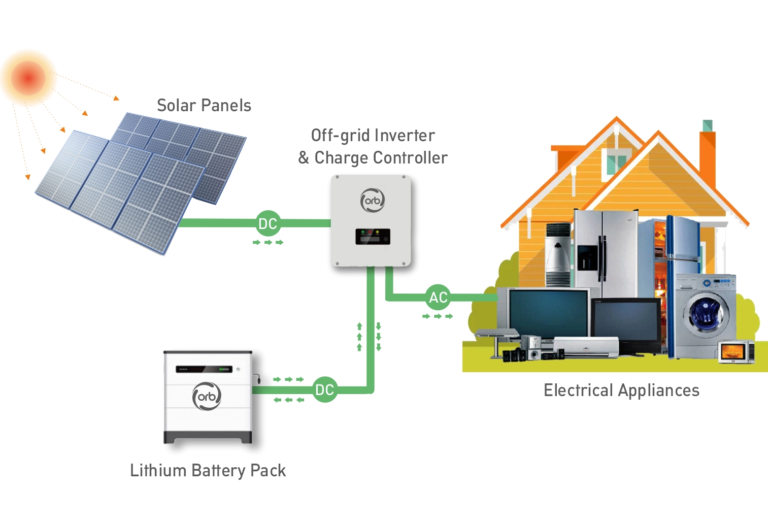
a/ Off-grid System
A standalone system not connected to the grid, using independent inverters and battery storage to supply loads directly.
Excess energy is stored for use when solar generation is insufficient.
Components:
- Solar panels
- Solar charge controller
- Battery system
- Standalone inverter
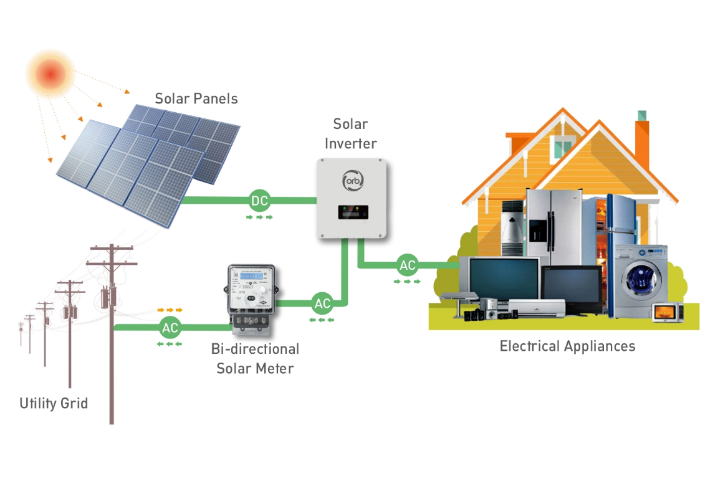
b/On Grid System
A system connected to the distribution grid using grid-tied inverters.
It can export excess electricity or limit export using a zero-export controller.
Components:
- Solar panels
- Grid-tied inverter
- Bi-directional meter
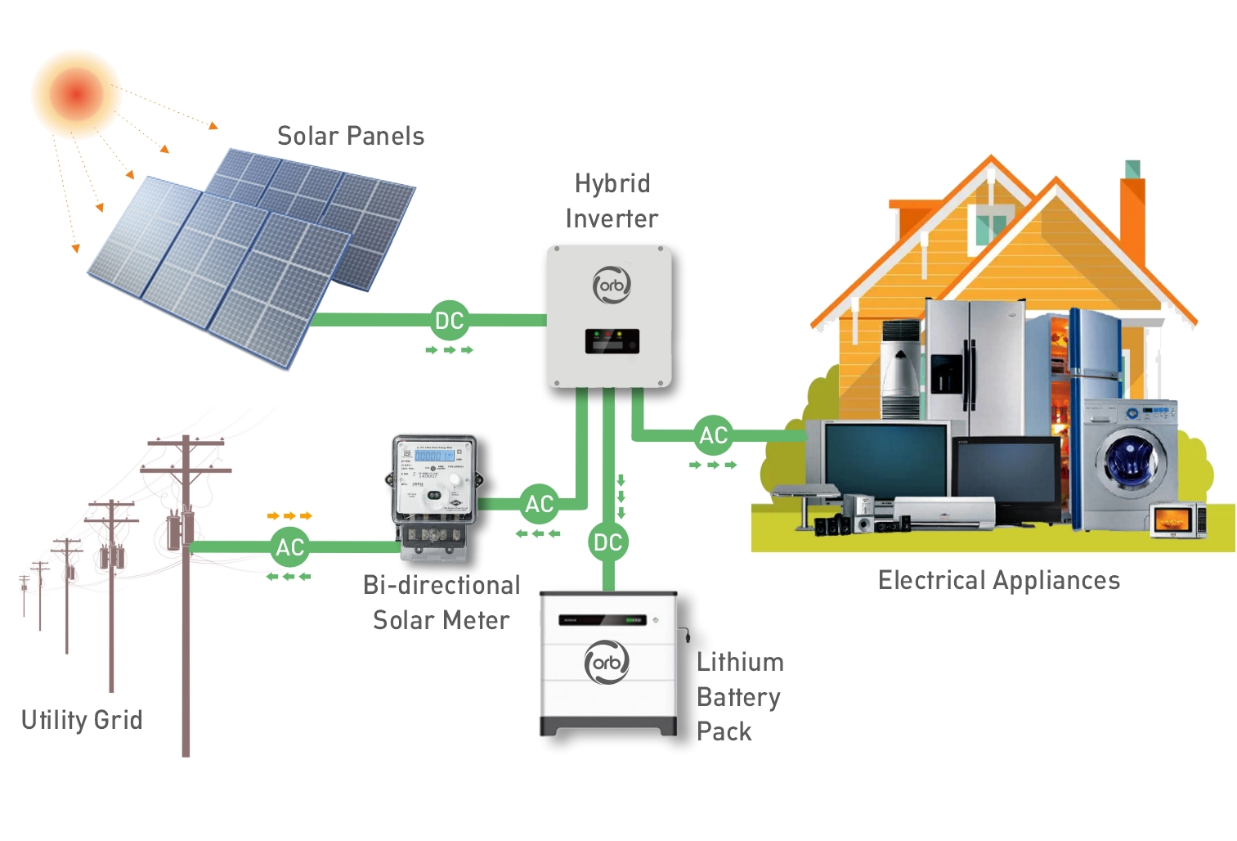
c/ Hybrid System (with storage)
A grid-connected system integrated with battery storage.
Operates like an on-grid system when grid power is available
Switches to off-grid mode during outages to ensure uninterrupted power supply
Battery storage can be charged from either the grid or solar energy.
Components:
- Solar panels
- Hybrid inverter
- Battery storage system
- Bi-directional meter
DESIGN & INSTALLATION
Rooftop solar projects must meet key requirements:
- System capacity aligned with actual demand
- Compliance with legal regulations
- High-quality, durable equipment
- On-schedule execution with strict safety standards
- Safe and efficient operation
SYSTEM OPERATION
A properly operated and maintained system can achieve a lifespan of 20–30 years.
Key activities:
- Operational monitoring
- Performance evaluation and optimization
- Equipment inspection and assessment
- Compliance with operational regulations
SYSTEM MAINTENANCE
Large-scale rooftop solar systems require highly skilled operators with deep technical expertise. Therefore, partnering with a professional O&M provider is essential for operation, maintenance, troubleshooting, and performance optimization.
PESE 's SERVICES
With strong technical capabilities in the energy and industrial sectors, PESE provides turnkey solutions for rooftop solar projects, including:
- Project consulting and development
- Engineering, Procurement, and Construction (EPC)
- Operation and Maintenance (O&M)
All services are delivered based on the principles of accuracy – safety – efficiency, ensuring the most suitable and optimized solutions for each client.
WHY CHOOSE PESE
- Proven experience delivering rooftop solar projects from hundreds of kWp to multi-MWp scale for domestic and international clients
- Highly trained workforce with expertise in design, installation, and O&M, strictly adhering to safety standards
- In-house manufacturing of solar mounting structures, adaptable to diverse terrains, with a modern factory capacity exceeding 20,000 tons/year at Long Khanh Industrial Park
- 24/7 monitoring and performance analysis via the PECC2-OCC Control Center
- Strong operational capability, managing over 30 MWp rooftop solar and 2,000 MWp ground-mounted solar projects
- Advanced testing equipment up to 500kV, with capabilities including IV curve testing, PR measurement, and AI-powered drone inspections
Project Highlights
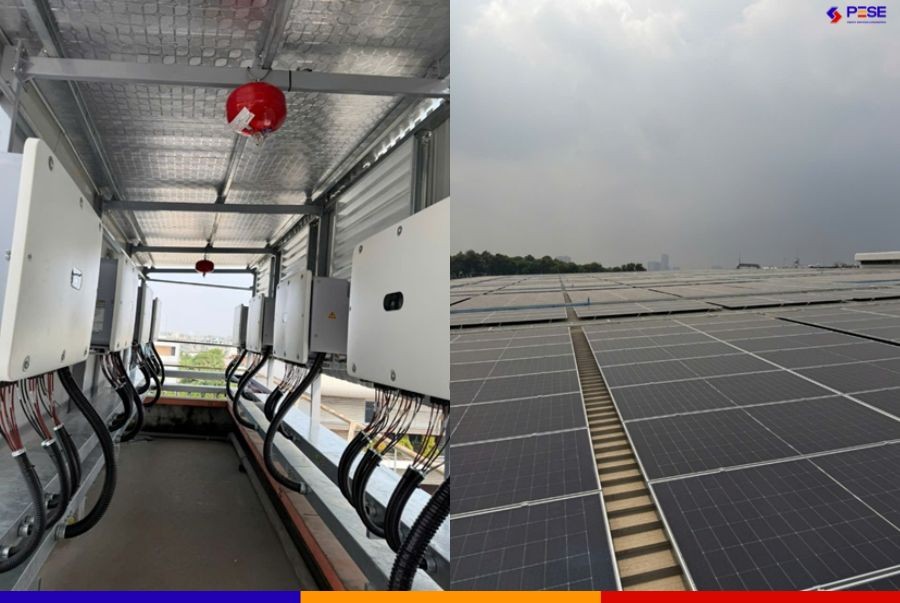
Rooftop Solar Installation at the PECC2 Building (420 kWp)
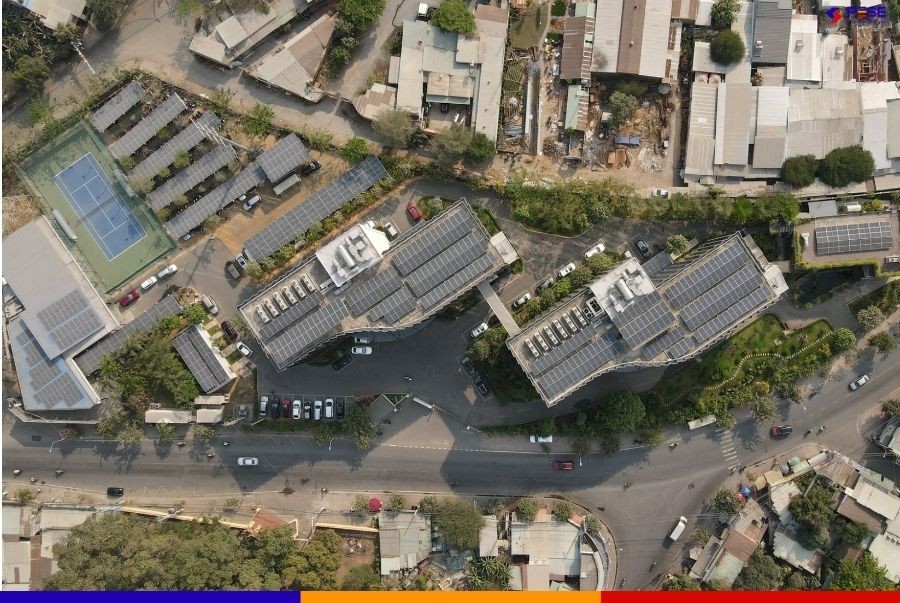
Rooftop Solar Installation at Masan (1 MWp)
Rooftop Solar Installation at Jasan Thanh Hoa (>6 MWp)
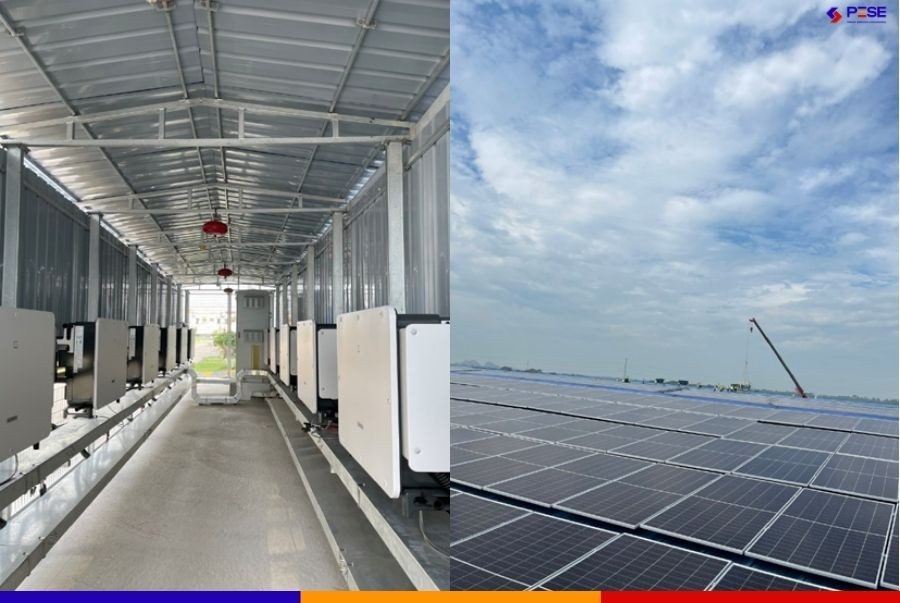
Rooftop Solar Installation at Emivest (>2 MWp)
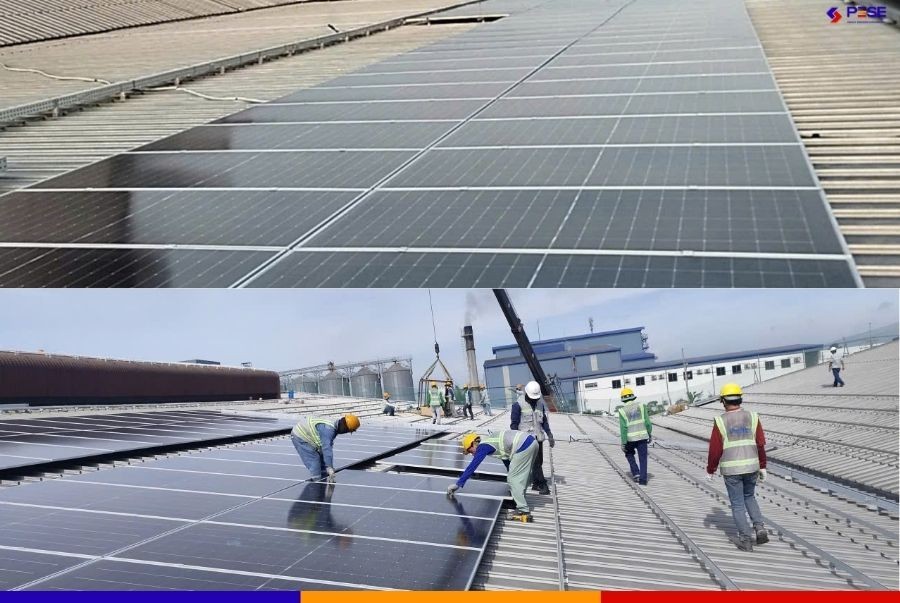
CONTACT US
If you are an investor in industrial parks, commercial buildings, or large-scale projects seeking an efficient and sustainable rooftop solar solution, PESE is ready to support you from consulting, design, and construction to operation.
Contact us for detailed consultation:
- Phone: (+84) 789 863 866
- Email: bdd.pese@pecc2.com
By PESE
Link tham khảo:
https://tuoitre.vn/dien-gio-dien-mat-troi-duoc-phe-duyet-cong-suat-mo-rong-ra-sao-20250416200033398.htm
https://nangluongvietnam.vn/phat-trien-dien-mat-troi-mai-nha-tai-cac-kcn-viet-nam-tiem-nang-hien-trang-thach-thuc-va-goi-y-chinh-sach-35045.html
https://vanban.chinhphu.vn/?pageid=27160&docid=213011


Các tin khác
- Head Office Address: PECC2 Innovation Hub, No. 45 Street 2, Thu Duc Ward, Ho Chi Minh City (HCM), Vietnam
- Factory Address: Street 6, Long Khanh Industrial Park, Binh Loc Ward, Dong Nai City
- PESE (Lao) Sole Co., Ltd: Thatluang Tai Village, Saysettha District, Vietiane City, Laos
- Phone: (+84) 789 863 866
- Email: bdd.pese@pecc2.com


All rights reserved


