

MEDIUM-VOLTAGE CABLE JOINTING & TERMINATION TRAINING: STRENGTHENING PESE’S O&M TECHNICAL CAPABILITIES
Precision in every operation. Safety in every stage of operation.
In a power plant electrical system, medium-voltage (MV) cables play a critical role in connecting electrical equipment, transformers, and power distribution or collection systems. Common medium-voltage levels used in power plants in Vietnam include 6 kV, 10 kV, 22 kV, and 35 kV.
Medium-voltage cable jointing and termination are highly precision-dependent activities that require strict compliance with technical and safety requirements. Errors in material selection, insulation preparation, cable termination, or tightening torque control can compromise insulation performance, lead to partial discharge or electrical faults, damage equipment, and directly affect personnel safety and overall power system reliability.
Therefore, technical competence is measured not simply by the ability to complete a cable joint or termination, but by the ability to control the entire process—from material selection and cable preparation to jointing, quality inspection, and the timely identification and resolution of abnormalities.
These activities require practical experience, attention to detail, and consistency at every stage—essential capabilities for ensuring the safe, stable, and reliable operation of electrical systems.
From Technical Knowledge to Hands-On Skills
In power plant operation and maintenance (O&M), technical personnel are regularly required to inspect equipment, perform preventive and corrective maintenance, conduct testing, and troubleshoot equipment in the field. These activities require engineers and technicians to understand not only equipment construction and operating principles, but also the correct procedures and technical requirements, particularly for medium-voltage electrical systems.
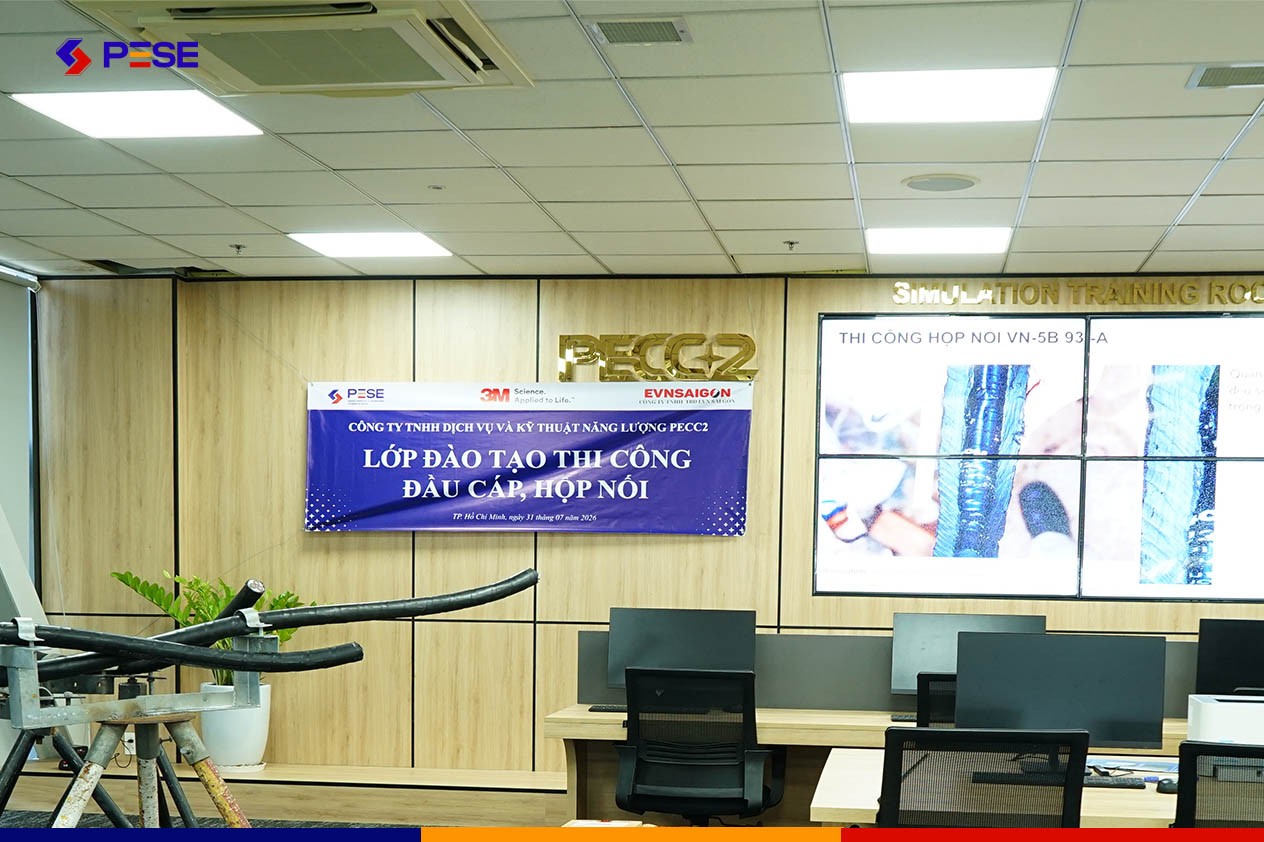 Medium-Voltage Cable Termination & Jointing Training Session
To strengthen the technical capabilities of its workforce, PESE, in collaboration with its partners, organized a specialized medium-voltage cable jointing and termination training program for PESE engineers and technical personnel.
The program consisted of two key components: theory and hands-on practice. This approach enabled participants to understand the principles, construction, and technical requirements of different cable termination systems while directly performing cable preparation, jointing, and installation procedures using cables, connectors, and materials commonly encountered in real-world projects.
Theoretical Training: Understanding Before Installation
Before moving to hands-on activities, participants were introduced to key technical topics, including:
- Material selection: Selecting materials compatible with the cable voltage rating, conductor cross-section, and cable configuration.
- Construction and operating principles: Understanding the construction, operating principles, and technical requirements of different medium-voltage cable termination systems.
- Jointing and termination methods: Understanding the characteristics and installation procedures of termination systems such as T-Plug, Elbow, and resin-filled cable joints.
- Technical requirements: Reviewing applicable standards, installation requirements, and critical parameters that must be controlled throughout the installation process.
- Risk identification: Recognizing common preparation and installation errors that may affect insulation performance, joint integrity, equipment reliability, and overall system safety.
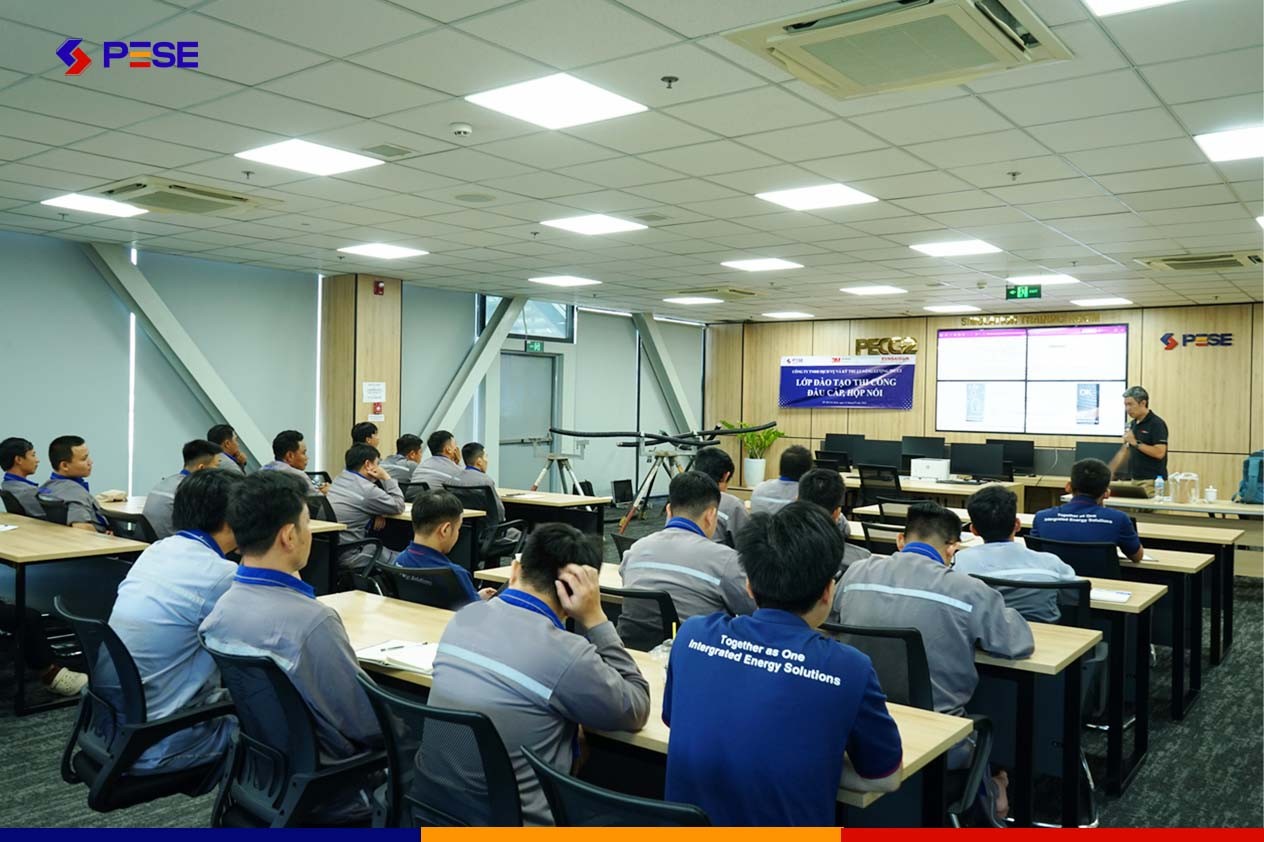 Participants receive technical guidance from industry experts
A key benefit of the theoretical training was that learning extended beyond training materials. Participants had the opportunity to engage directly with technical experts and discuss practical situations that can arise during installation and commissioning activities.
This exchange helped technicians better understand the connection between technical requirements defined in procedures and standards and the actual conditions encountered at project sites.
For O&M organizations, this practical perspective is particularly important because field conditions can vary significantly from one project to another. The ability to interpret technical requirements and apply them correctly in real operating environments is an essential part of professional technical competence.
Hands-On Practice: Turning Knowledge into Technical Capability
Following the theoretical sessions, participants were divided into smaller groups to conduct hands-on exercises involving different types of cable lugs and connection methods, including mechanical bolted cable lugs, standard compression cable lugs, and S-type compression cable lugs.
Under the guidance of technical experts, participants directly performed cable preparation and connection procedures. Rather than simply observing the process, technicians were required to carry out each stage themselves, allowing them to identify the critical control points associated with each operation.
The practical sessions also provided opportunities for participants to raise questions and address difficulties as they occurred. This helped them gain a clearer understanding of why specific technical requirements must be followed and what risks may arise when procedures are not properly executed.
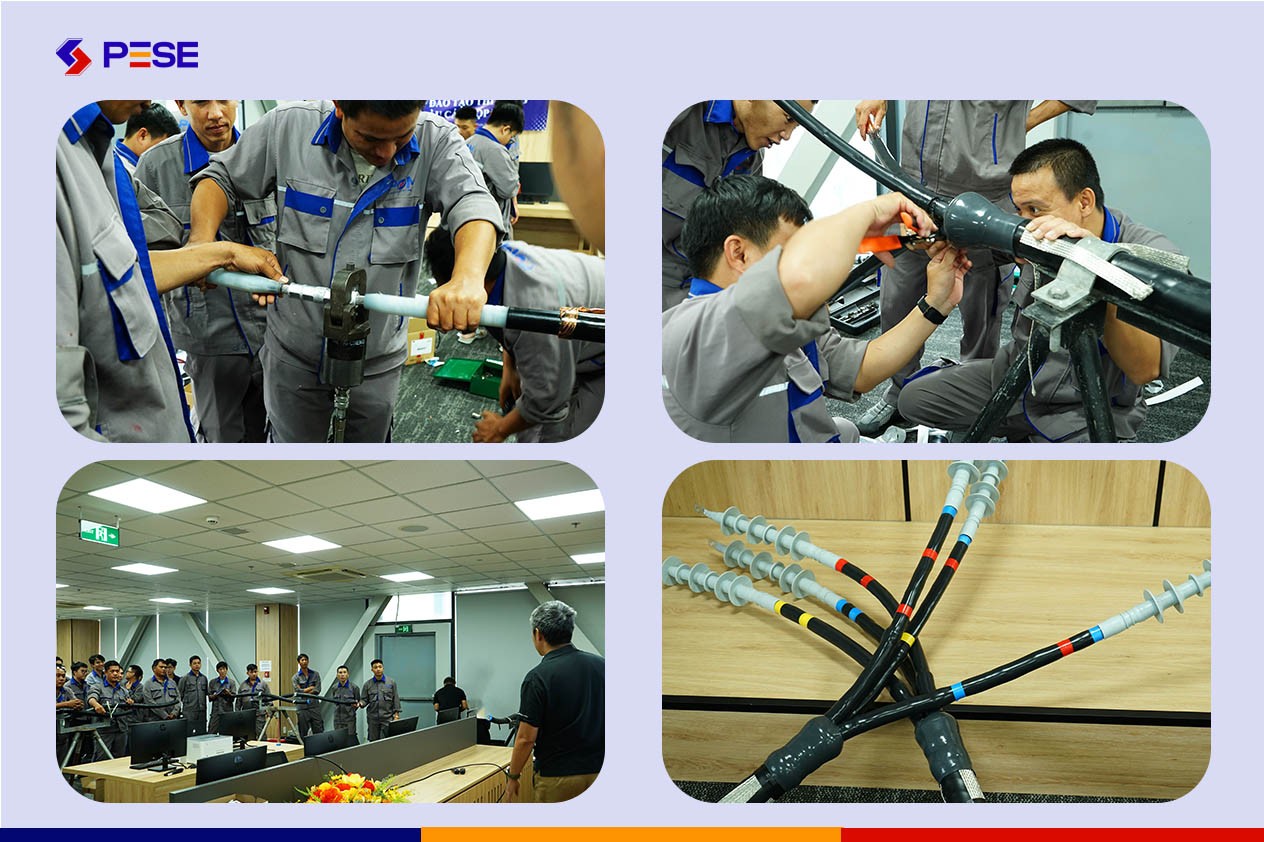
Hands-On Medium-Voltage Cable Jointing Training
The practical sessions also provided opportunities for participants to raise questions and address difficulties as they occurred. This helped them gain a clearer understanding of why specific technical requirements must be followed and what risks may arise when procedures are not properly executed.
For power plant O&M, practical training goes beyond simply teaching personnel how to perform a task. More importantly, it develops the ability to inspect, assess, identify abnormalities, and respond appropriately when equipment or electrical systems deviate from normal operating conditions.
Through hands-on practice, technicians can progressively strengthen their ability to recognize abnormal conditions, analyze potential causes, assess risks, and determine appropriate corrective actions based on actual site conditions.
From Cable Jointing Skills to O&M Capability
Medium-voltage cable jointing and termination are only some of the many technical competencies required of PESE’s engineering and O&M teams. However, they provide a clear example of the combination of technical knowledge, practical skills, quality discipline, and safety awareness required in power plant maintenance.
Through continuous technical training, PESE aims to develop comprehensive capabilities that can be applied throughout the power plant O&M lifecycle—from equipment inspection and condition assessment to preventive maintenance, testing, troubleshooting, and the safe and reliable restoration of operations.
These capabilities are particularly important for electrical systems where equipment downtime can directly affect power generation, system reliability, and production continuity.
PESE currently provides O&M services for various types of power plants and electrical systems, covering more than 40 power plant projects with a total managed operational capacity exceeding 4,500 MW.
In real-world O&M environments, medium-voltage cable jointing, inspection, testing, and troubleshooting do not exist as isolated technical activities. They form part of the broader capabilities required from an experienced O&M organization.
O&M personnel must understand equipment construction, operating principles, and electrical work methods while also strictly following safety procedures, coordinating effectively with relevant teams, accurately assessing equipment conditions, and responding to site-specific situations in accordance with applicable technical requirements.
Continuous Training to Maintain Technical Competence
For medium-voltage cable jointing and termination, the reliability of a connection depends on multiple factors—from appropriate material selection and compliance with installation procedures to technician skill, workmanship, and post-installation inspection and testing.
Training, therefore, should not be viewed as a one-time activity. It is an integral part of maintaining, standardizing, and continuously developing the technical capabilities of an O&M workforce.
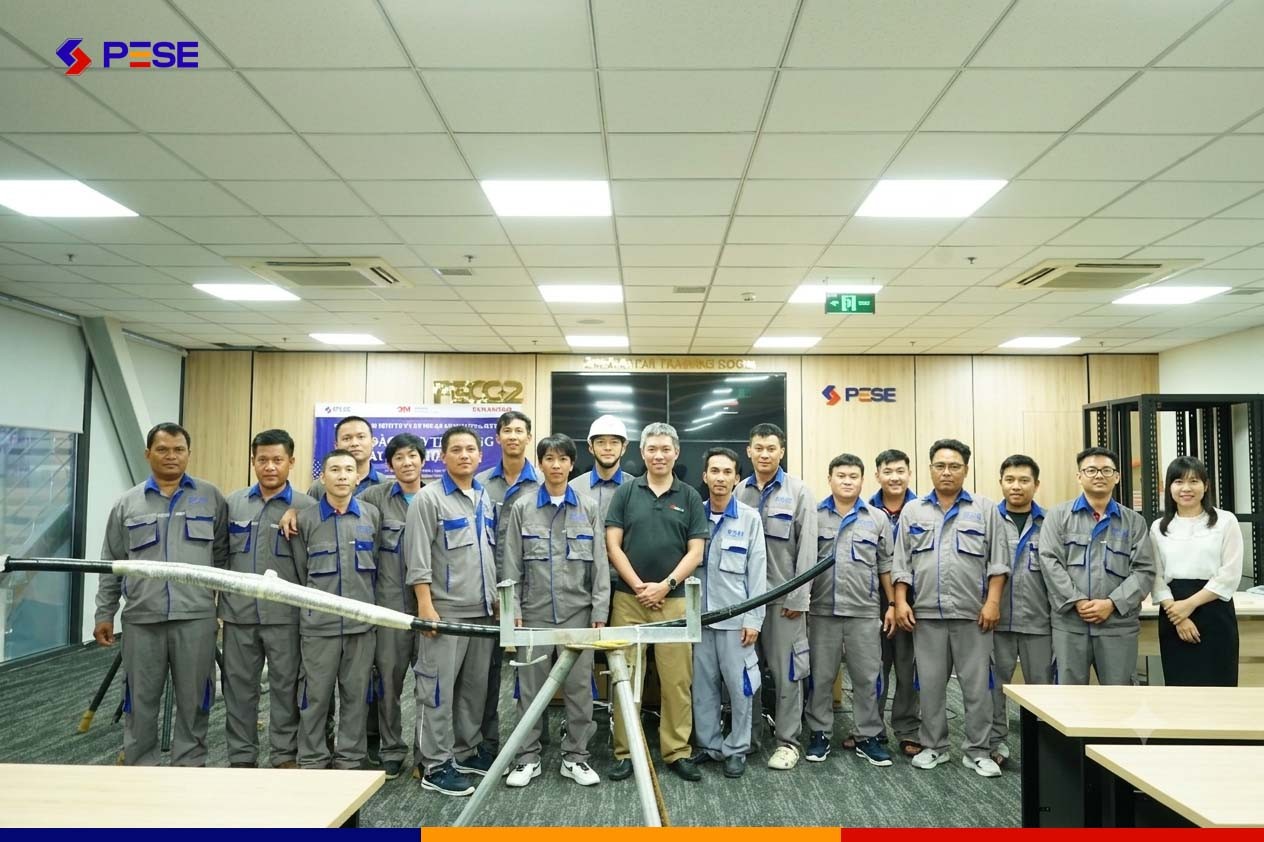 Participants pose for a group photo with the training experts.
PESE operates its management system in accordance with ISO 9001, ISO 14001, and ISO 45001, establishing consistent principles and requirements for quality, environmental management, occupational health, and safety.
Alongside maintaining these management systems, PESE continuously implements specialized training programs covering power plant operation, maintenance, troubleshooting, electrical systems, and technical safety to strengthen and maintain the capabilities of its engineering and technical teams.
For activities involving medium-voltage cable jointing and termination, the ultimate objective of training is not simply to ensure that personnel can perform a task correctly. More importantly, it is to develop the ability to follow procedures systematically, control risks, identify and assess abnormal conditions, and execute technical work safely and consistently.
This capability provides an important foundation for PESE to continue delivering O&M and integrated technical services to customers across power plants, electrical transmission systems, and energy infrastructure where safety, reliability, technical competence, and operational continuity are critical.
By PESE.


Các tin khác
- Head Office Address: PECC2 Innovation Hub, No. 45 Street 2, Thu Duc Ward, Ho Chi Minh City (HCM), Vietnam
- Factory Address: Street 6, Long Khanh Industrial Park, Binh Loc Ward, Dong Nai City
- PESE (Lao) Sole Co., Ltd: Thatluang Tai Village, Saysettha District, Vietiane City, Laos
- Phone: (+84) 789 863 866
- Email: bdd.pese@pecc2.com


All rights reserved


